The Process
About the Soap
Soap making is a science. It can also be an art. Here’s the science part. Soap is made of three basic ingredients: fats, water, and lye. You can use various combinations of fats in soapmaking. Some examples of common fats are palm oil, lard, olive oil, coconut oil, castor oil, shea butter, and cocoa butter, just to name a few. Each type of fat contributes a different property to the soap. I like to use a combination of palm oil or lard, olive oil, coconut oil, and castor oil.
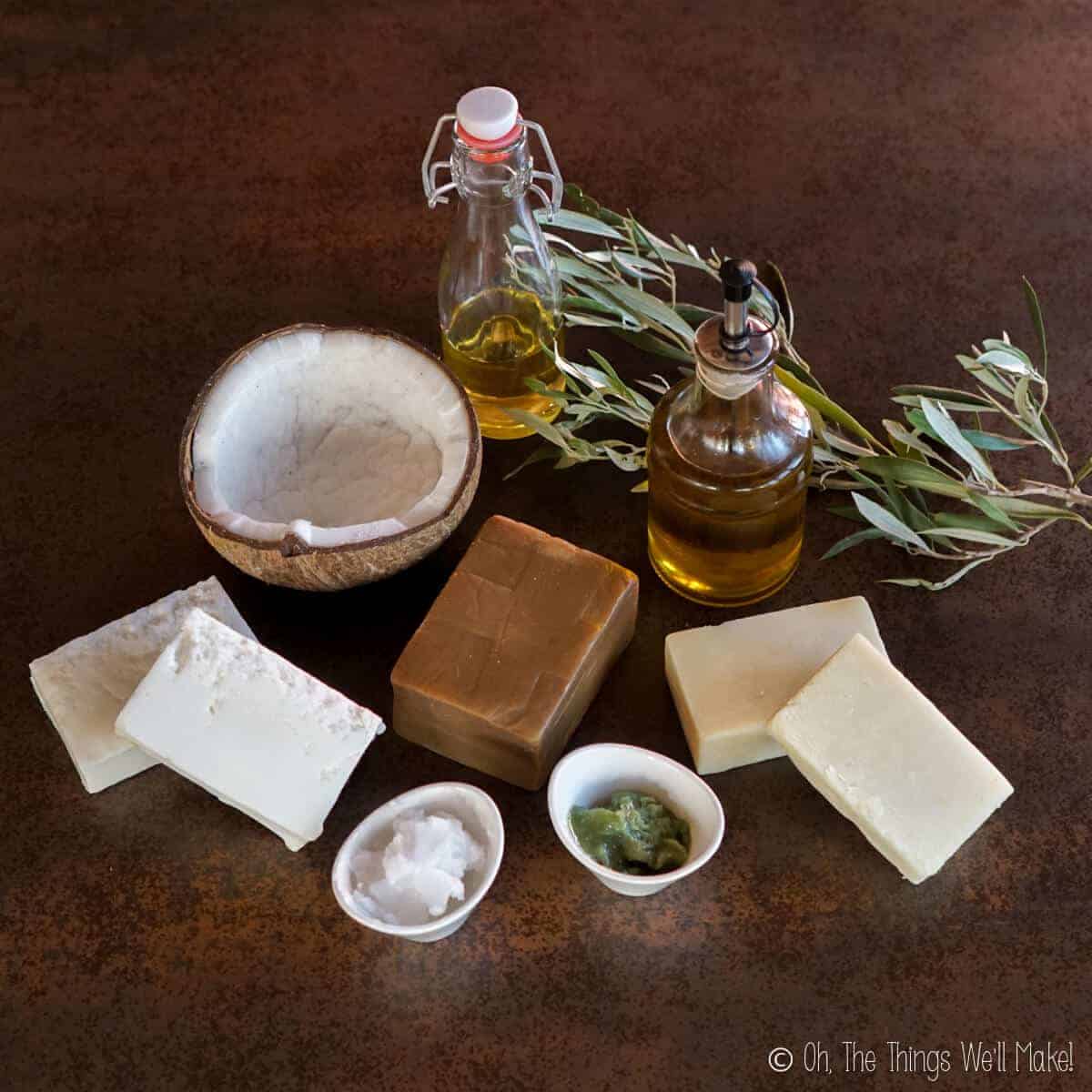
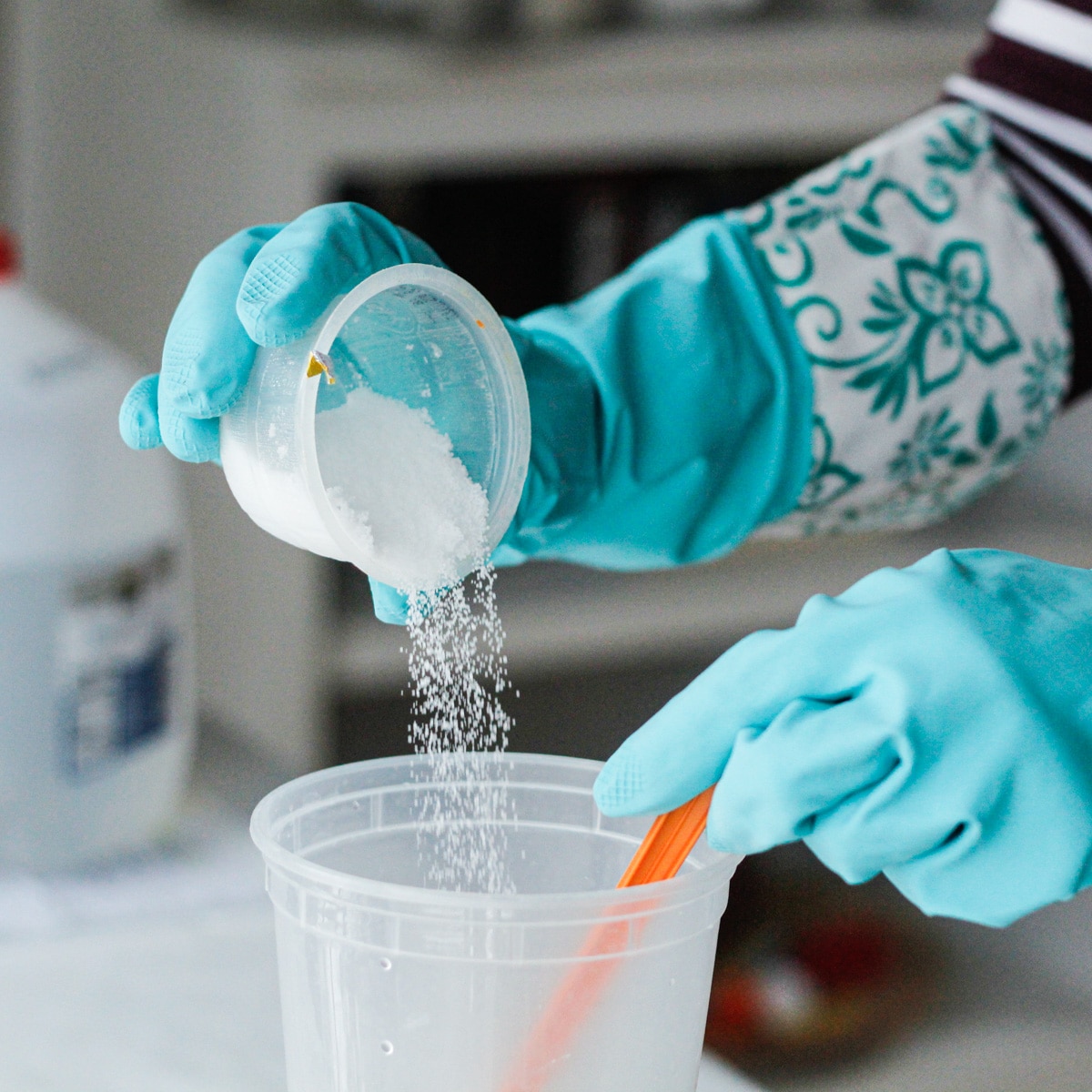
I melt the fats and bring them to about 90 to 125 degrees. In the meantime, you can dissolve the lye in the water. Since this lye water can take a long time to cool down, I like to make a batch of lye water ahead of time so I can skip this step. (You must always use what is called a “lye calculator” to find out how much lye you need, because different fats require different amounts of lye).
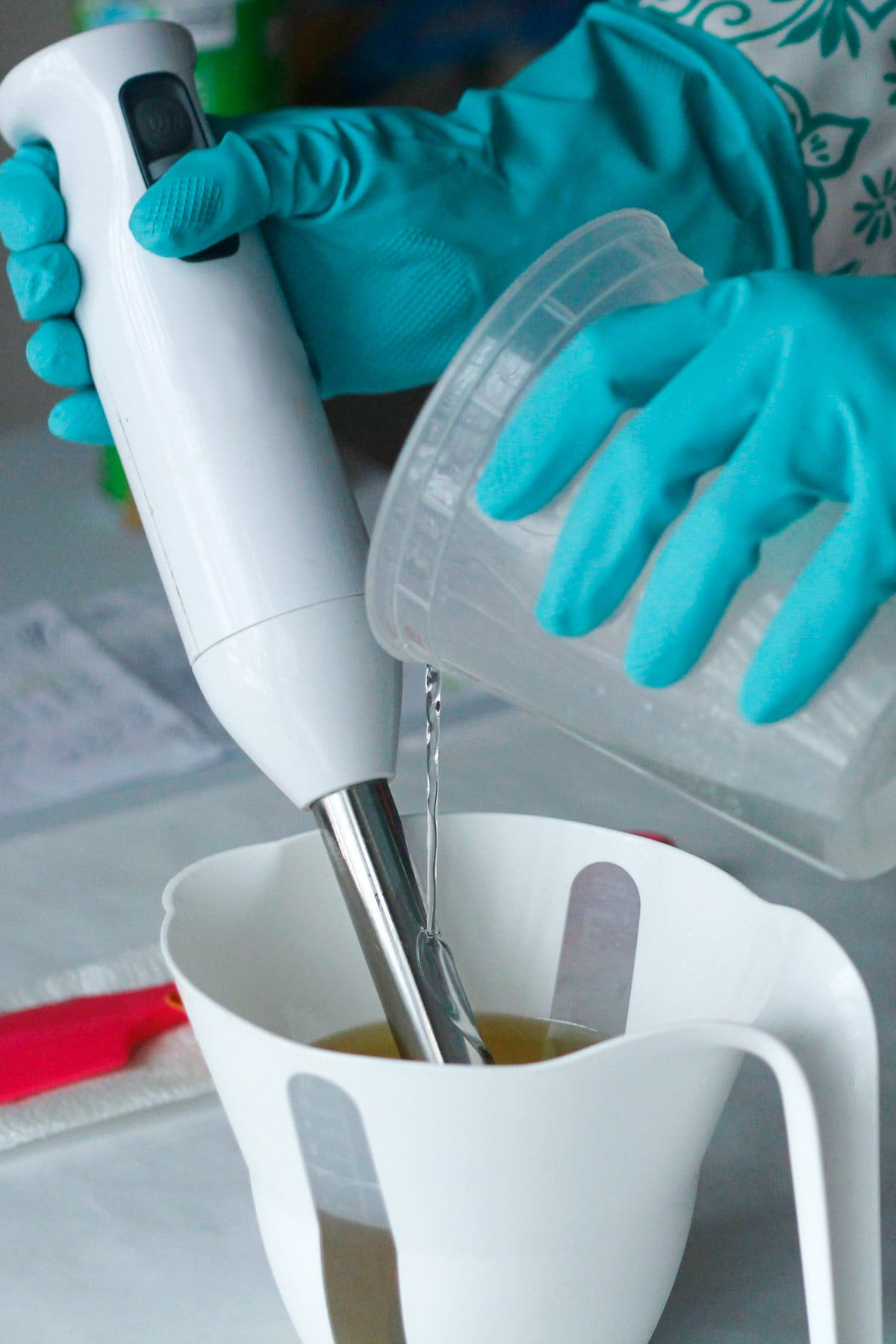
When the melted fats are the correct temperature, I pour the lye water into the fats and stir gently with a stick blender. Then I turn on the stick blender to mix it a little more. I add some coconut milk for creaminess and essential oils for fragrance. I keep blending until the batter comes to what we call “trace.” Trace is the term for when the batter becomes a certain thickness. When the mixture comes to the thickness I like, I divide it into two bowls.
And this is the art part of soapmaking. I mix one color into one bowl, and another color into the other bowl. I like to use natural colorants, which are made of various types of ground up plant materials. After mixing in the colors, I swirl the colors together gently.
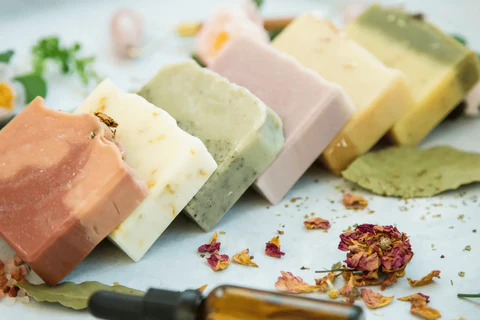
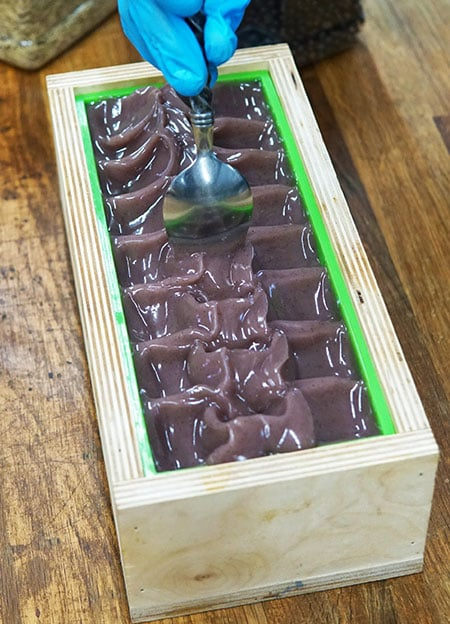
Now, it is time to put the soap batter into the molds. You can use decorative shape molds, or “loaf” molds, which are like a bread loaf pan but skinnier. I let the soap batter stay in the mold for two or three days, in which time it will solidify. During this time, “saponification” happens. Saponification means that the fats molecules and the lye molecules are fusing together. When they are finished fusing, you no longer have fats or lye. You have a new product called soap.
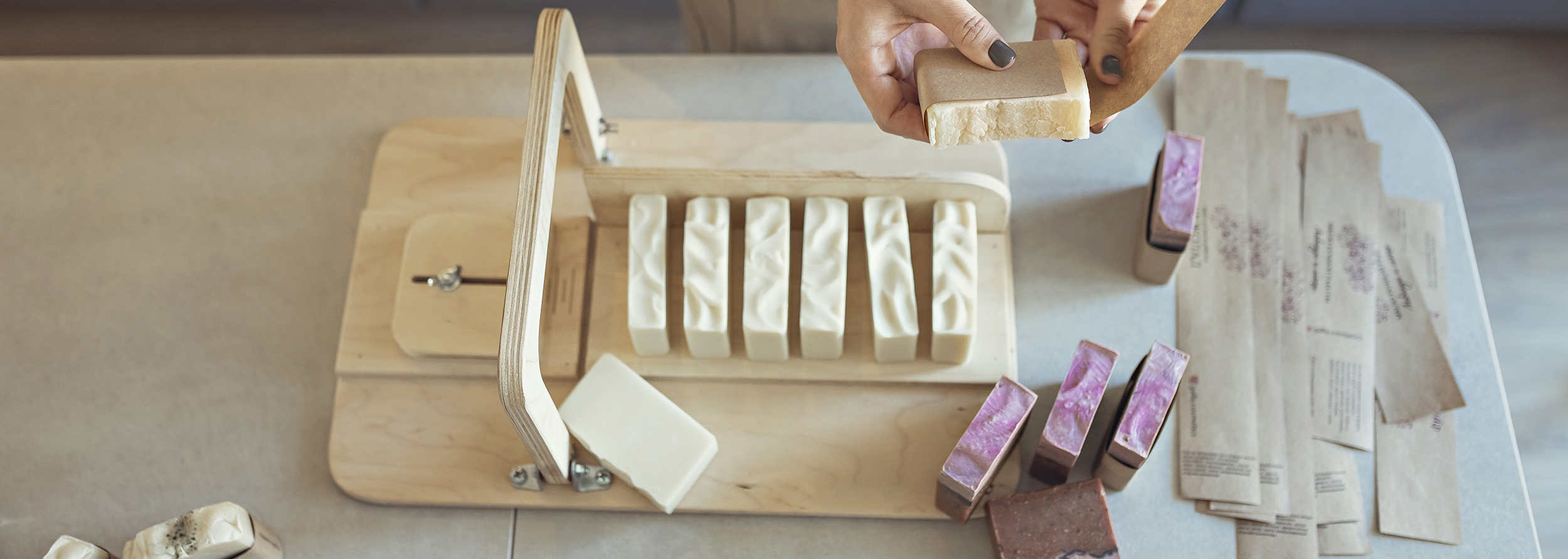
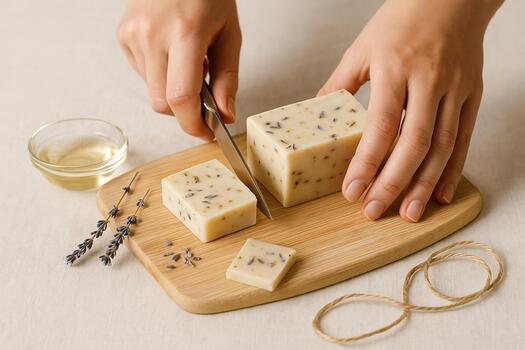
Now the magic happens! I remove the soap from the molds and slice it, the way you would slice bread. I call this the magic part because now you can see what the swirls look like!
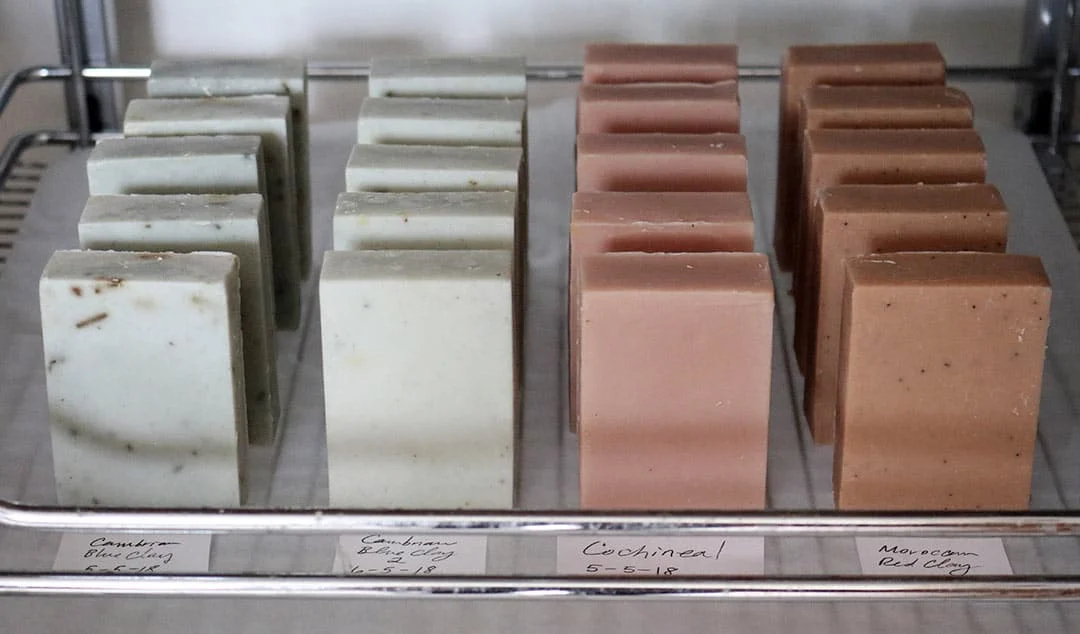
Now is the soap ready to use? Not yet. You have soap that is ready to “cure.” Curing is the time where the extra liquids evaporate from the soap. If you don’t let the soap cure, the soap will turn into a squishy mess and will dissolve in a couple of days. I stand my soap bars at least an inch from each other so air can circulate around them. Curing time usually lasts from 4-6 weeks. I like to let mine cure for 8 weeks.
 So, that is the basic process of soapmaking! I find it to be fun, creative, and rewarding.